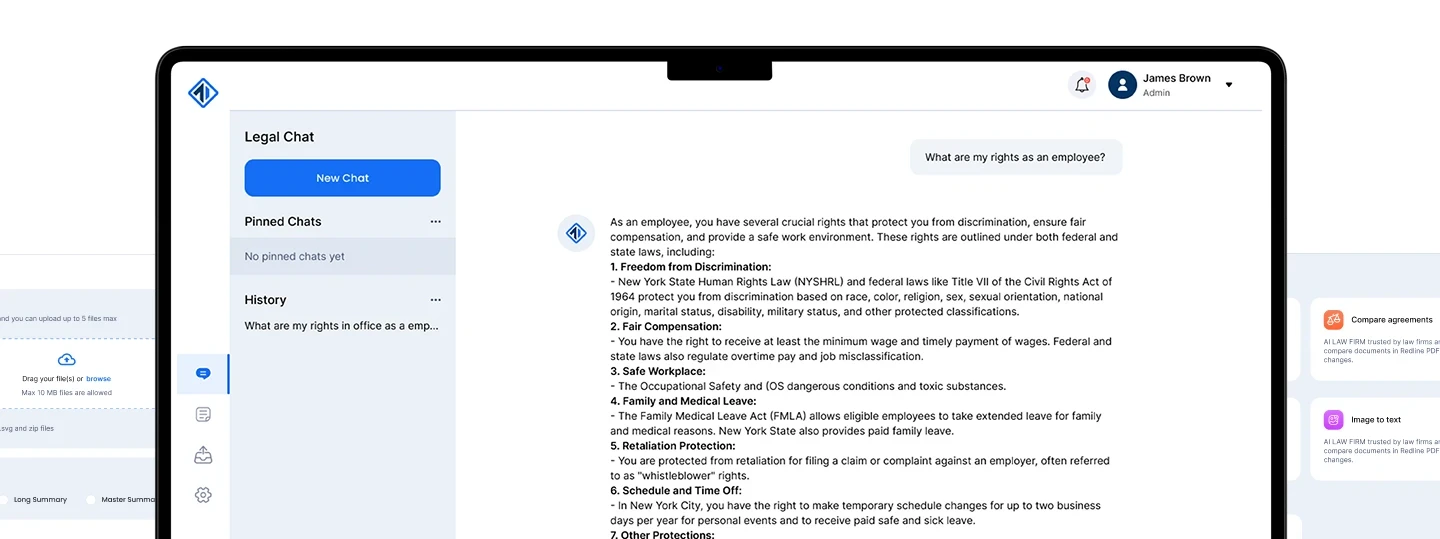
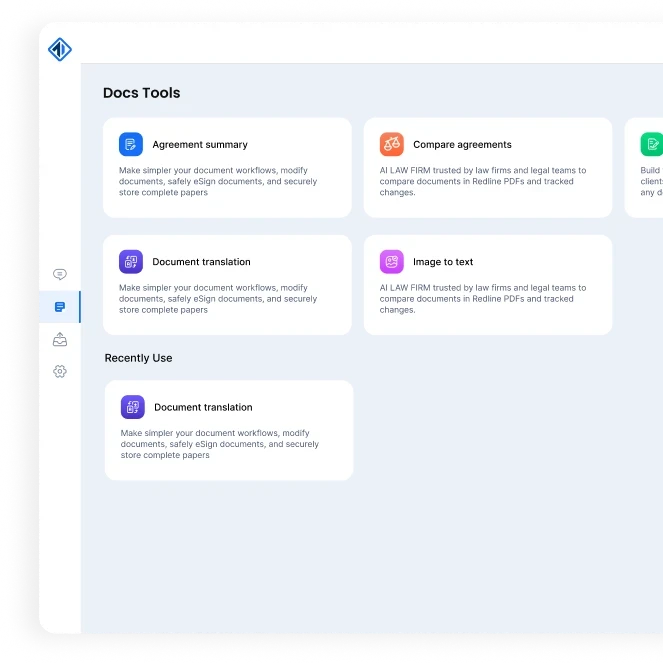
AI LAW FIRM is a next-gen SaaS solution transforming the legal industry by making legal support faster, smarter, and more accessible.
Key Features
Instant Legal Advice via AI-powered chatbot
Smart Document Generation (NDAs, contracts, and more)
AI Case & Clause Analysis for legal document review
Multi-Tenant Firm Dashboard to manage clients, monitor AI responses, and intervene when needed
DesignProcess
To build a user-centered legal SaaS product, we followed the 5-stage Design Thinking framework, ensuring that every feature solved real problems with clarity and trust.
Empathize
Understand the needs and behaviors of our users
Define
Synthesize insights into a clear problem statement
Ideate
Explore creative solutions and plan core features
Design
Build interactive representations to test and validate
Testing
Collect feedback, validate design decisions, and iterate
ProjectTimeline
To build a user-centered legal SaaS product, we followed the 5-stage Design Thinking framework, ensuring that every feature solved real problems with clarity and trust.
Challenges &Solutions
Building AI LAW FIRM meant tackling complex challenges across AI, law, and SaaS architecture. We addressed user trust by adding legal disclaimers and lawyer oversight, while refining AI prompts to improve accuracy and context. Ensuring GDPR compliance and secure multi-tenant infrastructure added technical depth. With only five weeks to deliver, we focused on core features, worked in parallel sprints, and used automation to stay efficient and on track.
Problems
Legal Complexity & User Trust
Users were skeptical about relying on AI for legal matters, fearing inaccuracy, misinterpretation, or non-compliance.
Compliance & Data Privacy
Handling sensitive legal documents and user data required strict security and privacy compliance.
AI Accuracy & Context Sensitivity
AI models sometimes misunderstood legal prompts or gave generalized advice lacking jurisdictional accuracy
Multi-Tenant Architecture
Creating a dashboard for multiple law firms with isolated data and user management was technically complex
Solutions
Built User Trust
Users were skeptical about relying on AI for legal matters, fearing inaccuracy, misinterpretation, or non-compliance.
Ensured Legal Compliance
Implemented GDPR-compliant practices, role-based access control, and encrypted data handling
Improved AI Accuracy
Optimized prompt engineering and scoped AI to specific, low-risk legal tasks to ensure consistent
Simplified Multi-Tenant Management
Developed isolated firm dashboards with secure client data segmentation and administrative controls
EmpathizePhase
Qualitative Research
To build a user-centered legal SaaS product, we followed the 5-stage Design Thinking framework, ensuring that every feature solved real problems with clarity and trust.
Interview Questions
To uncover deeper user needs and expectations, we used open-ended questions such as:
What are your biggest challenges when accessing legal help or documents?
How do you currently handle tasks like contracts, NDAs, or legal reviews?
What would make an AI-powered legal tool valuable for you?
How important is professional oversight or customization in your legal processes?
Have you used any legal-tech or AI legal tools before? If so, what worked or didn’t?
UserPersona
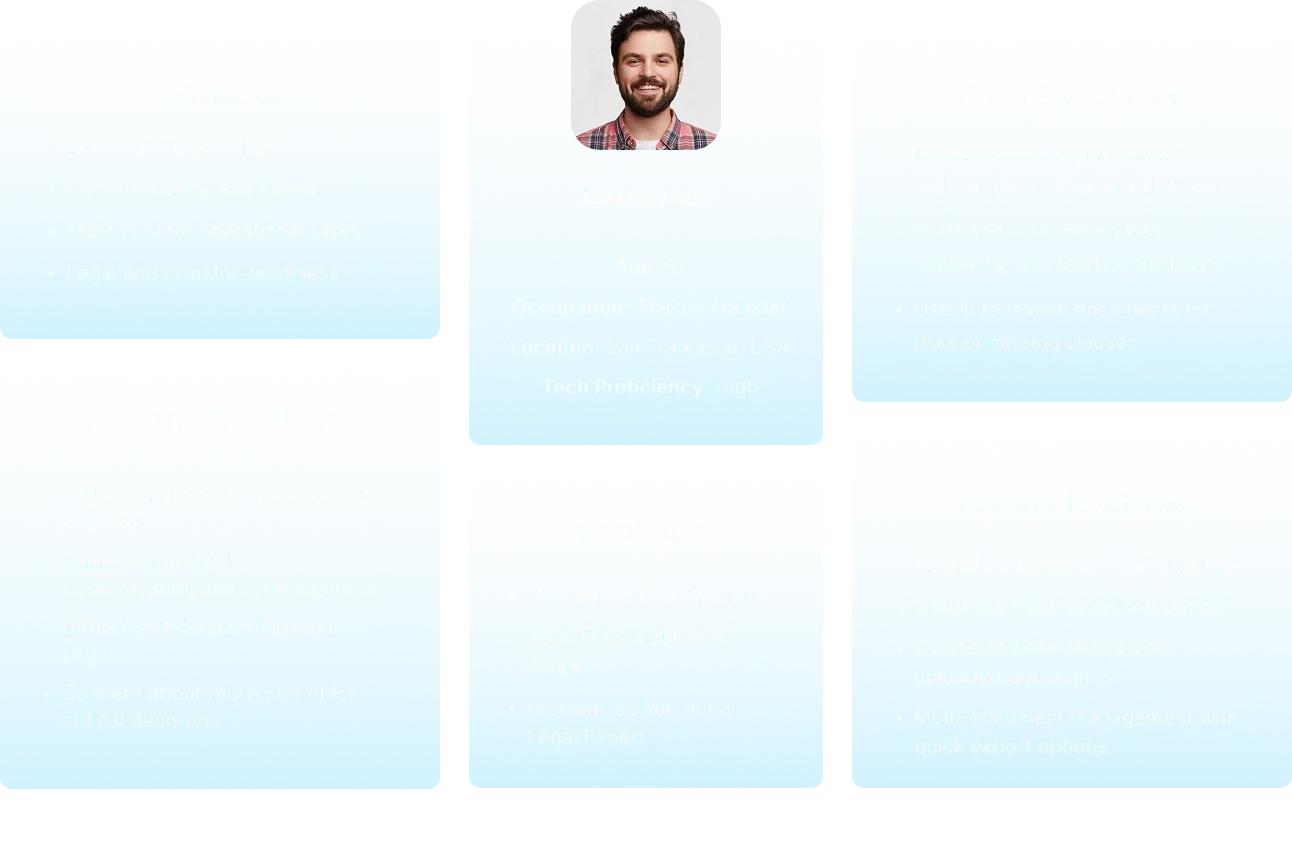
To design a seamless, intuitive, and user-centric experience for AI LAW FIRM, we developed detailed user personas based on our qualitative research and interviews. These personas reflect our core audience and help us align the product design with their specific goals, challenges, and expectations.
By identifying and understanding key user types—such as startup founders, freelancers, and law firm admins—we ensured the application delivers value across all use cases, from fast contract generation to efficient client and case management.
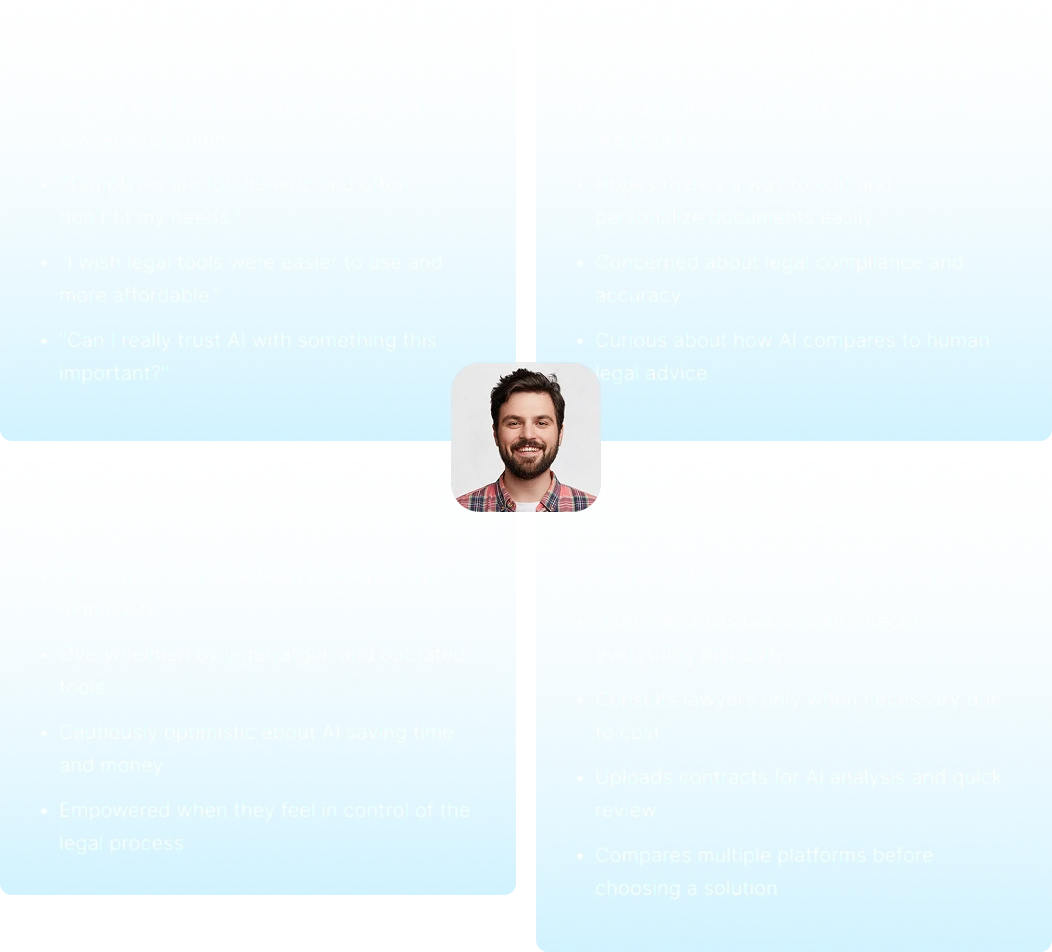
EmpathyMap
The Empathy Map helps us visualize user insights and better understand their thoughts, feelings, and behaviors while interacting with AI LAW FIRM. This ensures our product design aligns with real user needs and solves meaningful legal workflow challenges.
Typography &Color
Qualitative Research
We used Inter for its clean, professional look and high readability. Bold headings establish trust, while lighter body text ensures comfort during longer reads, creating a clear and user-friendly visual hierarchy.